

Maritime shipping is in its decarbonization era. Despite a steady drumbeat of mixed regulatory messages, carriers around the world are still focused on lowering emissions. They’ve invested in newbuildings, retrofits, alternative fuels, voyage optimization, and a dizzying array of other decarbonization initiatives, all aimed at boosting sustainability, safety, and profitability industry-wide.
Perhaps no decarbonization technology has commanded more attention from industry insiders and outsiders alike than wind-assisted propulsion. To its proponents, it’s an ancient solution made modern. Giant high-powered sails deliver the clean power necessary to cut fuel — shipping’s biggest cost — and emissions in line with regulations like EU ETS and CII. To its skeptics, it’s an expensive ornament that generates more headlines than savings.
Ultimately, owners and operators will judge wind-assisted propulsion on its economics: how much fuel and emissions does it save? To date, making that assessment has been easier said than done — analyses from manufacturers and carriers claim savings ranging from the low single-digits to north of 20%, creating a muddled picture of sails’ success.
Let’s explore how to better understand — and maximize — wind-assisted propulsion’s actual savings potential.
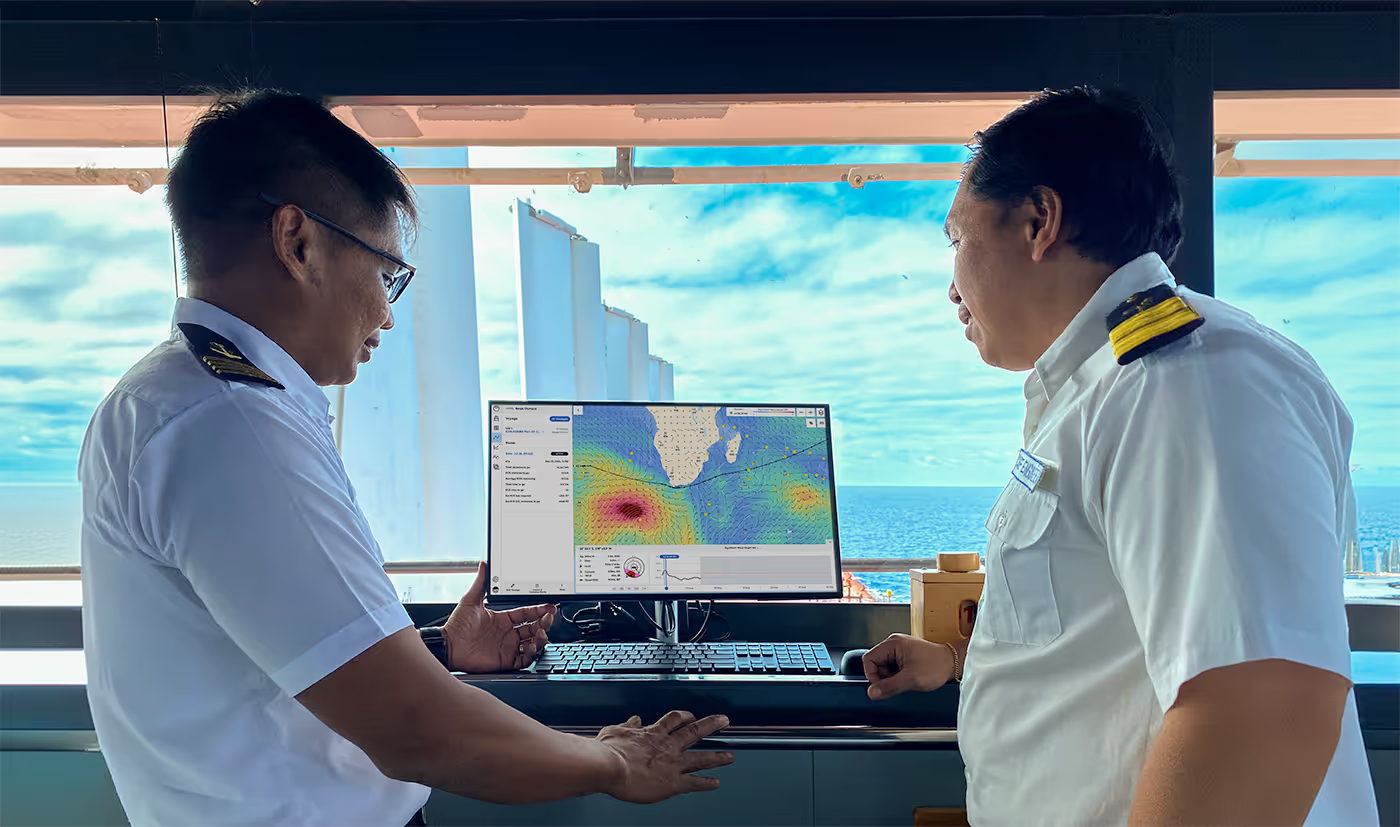
It is critical that operators first assess the savings potential of a vessel with wind-assisted propulsion pre-departure. Unfortunately, traditional voyage planning tools are not up to the task. They over-rely on manual spreadsheet calculations and theoretical assumptions, and fail to capture the dynamic nature of a weather-dependent technology like wind-assisted propulsion.
Sofar’s Wayfinder Voyage Simulator is different. It instantly predicts how a vessel will perform in any sea state, accounting for the complex, real-time interactions between a ship, its sails, the wind, and other weather factors. Its predictions are powered by our highly accurate marine weather forecasts — which outperform the next best operational weather model by up to 50% — and daily-updated digital twins of each unique ship.
As vessel, weather, and market conditions shift, Wayfinder Voyage Simulator reacts immediately, adjusting the voyage’s projected fuel cost, emissions, and other key metrics in real time. This dynamic intelligence helps operators assess whether wind propulsion will have a positive impact on a voyage and let’s them test unlimited scenarios pre-departure:
Once a voyage is underway, wind-assisted propulsion does not deliver savings by default. On the wrong route or at the wrong speed, sails can have little to no (or even a negative) effect on a vessel’s performance.
Voyage optimization platforms help operators avoid this outcome. They deliver the most efficient route and speed based on a vessel’s design; its unique economic, safety, and emissions targets; and how it performs in different weather conditions. For a ship with sails, performance in different wind conditions is carefully considered; at the right speed and heading, wind generates extra thrust that reduces a vessel’s engine load and fuel consumption.
Carriers around the world use our Wayfinder Voyage Optimization platform to route vessels with wind-assisted propulsion and maximize the savings attributable to sails. Leading independent dry bulk owner Berge Bulk, for example, leverages Wayfinder to optimize voyages for two wind-assisted vessels: Berge Olympus and Berge Neblina.
“We are trying to build a standard methodology on how to evaluate the effect of wind-assisted propulsion technologies on the vessel,” said Paolo Tonon, Technical Director at Berge Bulk. “The merge we are having with [Wayfinder] is really fundamental in doing so because it gives us transparency.”
Wayfinder’s daily-updated, ship-specific digital twins automatically factor in sailing thrust as a function of wind speed and direction. Using these digital twins and the most accurate ocean intelligence, Wayfinder delivers physics-based speed and route guidance that exposes a vessel to favorable wind conditions, maximizing the benefits of sails for overall earnings.
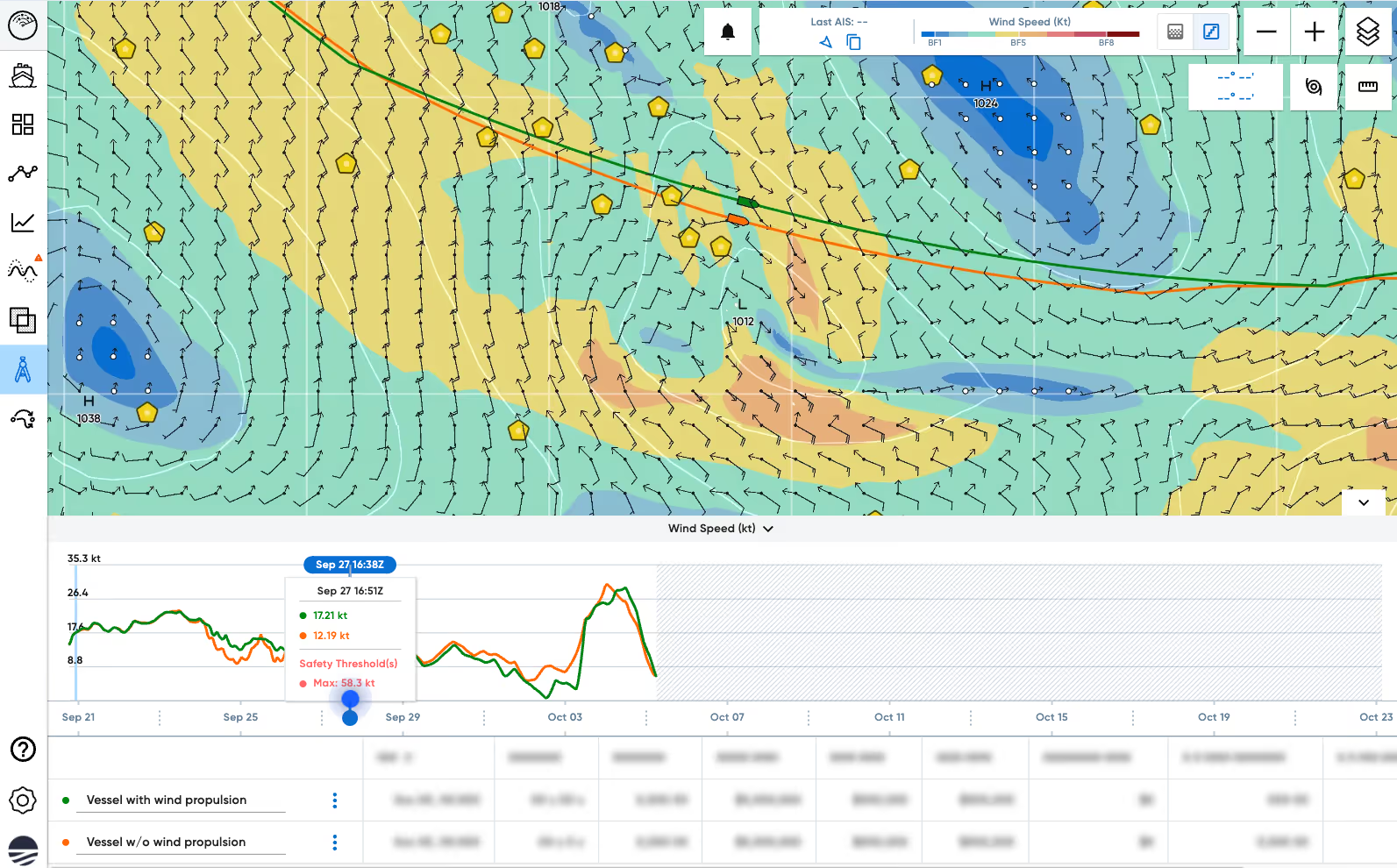
How significant are the economic benefits of wind-assisted propulsion? To find out, we performed a side-by-side optimization of two identical vessels — one with wind-assisted propulsion and one without. The vessels traveled simultaneously between the same ports in the same real, historical weather conditions. This allowed us to isolate the effect of wind propulsion on vessel performance.
Check out the full, interactive demo below (best viewed on desktop / laptop).
In the demo, the voyages produce sharply different outcomes. Relative to its counterpart, the vessel with wind-assisted propulsion:
These results show us what is possible, but not necessarily what is probable. Every vessel and voyage is unique; market factors and weather conditions shift constantly; and wind-assisted propulsion systems are still changing and improving rapidly. Real consensus may be years away.
What is clear is that voyage simulation and optimization are prerequisites for understanding and maximizing the potential of wind-assisted propulsion. The operators that trust in data — instead of assumptions — will demystify wind-assisted propulsion’s impact, and their findings will determine how quickly the technology is adopted.
Wayfinder helps wind-assisted (and conventional!) vessels around the world plan and optimize voyages to save fuel, emissions, time, and cost.
Interested in seeing how much Wayfinder can save your fleet? Watch this presentation from our Principal Scientist, Pieter Smit, or get in touch.
.jpg)

