%20(1).avif)
The Coral Nursery from the ToBo Lab is hard to mistake for anything else. From the air it looks like a small floating chessboard: an 80-foot by 80-foot platform of seven mid-water pens suspended between three and six feet deep, tethered alongside Moku o Loʻe, home to the Hawaiʻi Institute of Marine Biology, in the middle of Kāneʻohe Bay.
.avif)
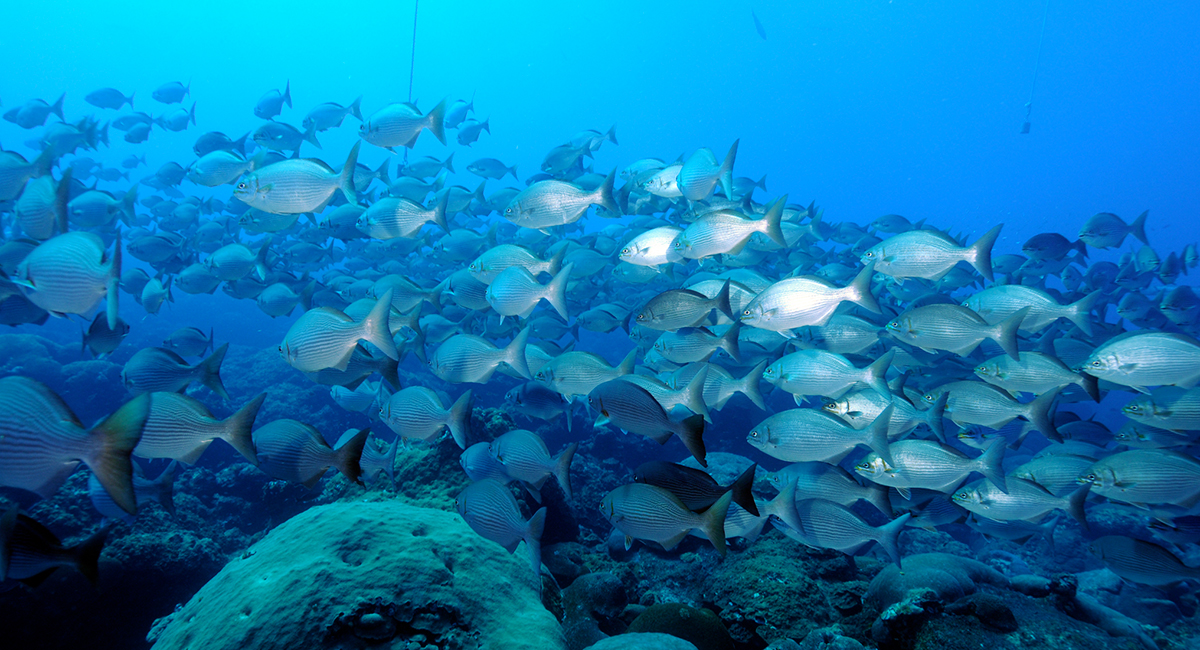
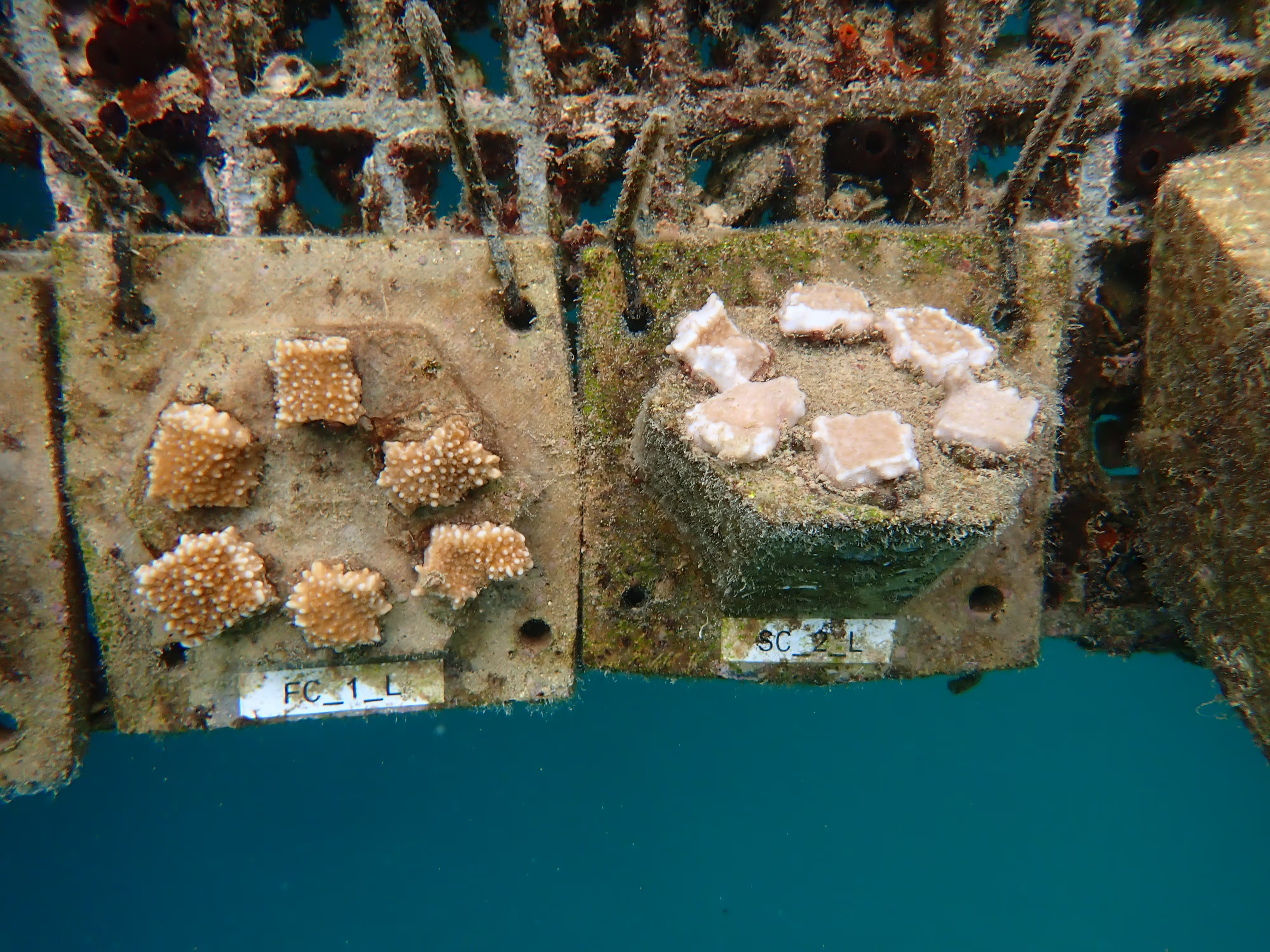
Inside those pens sit roughly 10,000 corals. Most are what Chris Suchocki, the nursery's manager, and Claire Bardin, its senior aquarist, call "corals of opportunity": colonies salvaged from leftover experiments around the institute, kept alive in a single place where researchers can return to them without a new permit each time. Some have been there for nearly a decade. Sponges, algae, tunicates, and clams encrust the platforms. A resident school of about 200 goatfish patrols the pens, white-tip reef sharks pass through in summer, and the nursery itself spawns coral larvae that seeds the surrounding reef each year.
The design exists because Kāneʻohe Bay's seabed is sediment-heavy and unkind to fixed seabed infrastructure. Suspending the platforms keeps the corals at a consistent depth through every tide and away from the silt below. It also makes the nursery, in effect, a research instrument: a controllable but ocean-exposed environment where students can run experiments that would otherwise require a permit to deploy on wild reefs.
Tour groups come through often, community college classes and summer programs cycle through during the year, and researchers move in and out as their experiments require. HIMB has been expanding its public-facing work for the past decade, and the nursery is one of the most iconic stops for tour groups.
.jpeg)
But the docks, buoys, and corals are only part of what makes the nursery work. The ocean itself gives it life, and for years what exactly was happening in the water was a mystery. Nobody had a continuous, real-time record of it.
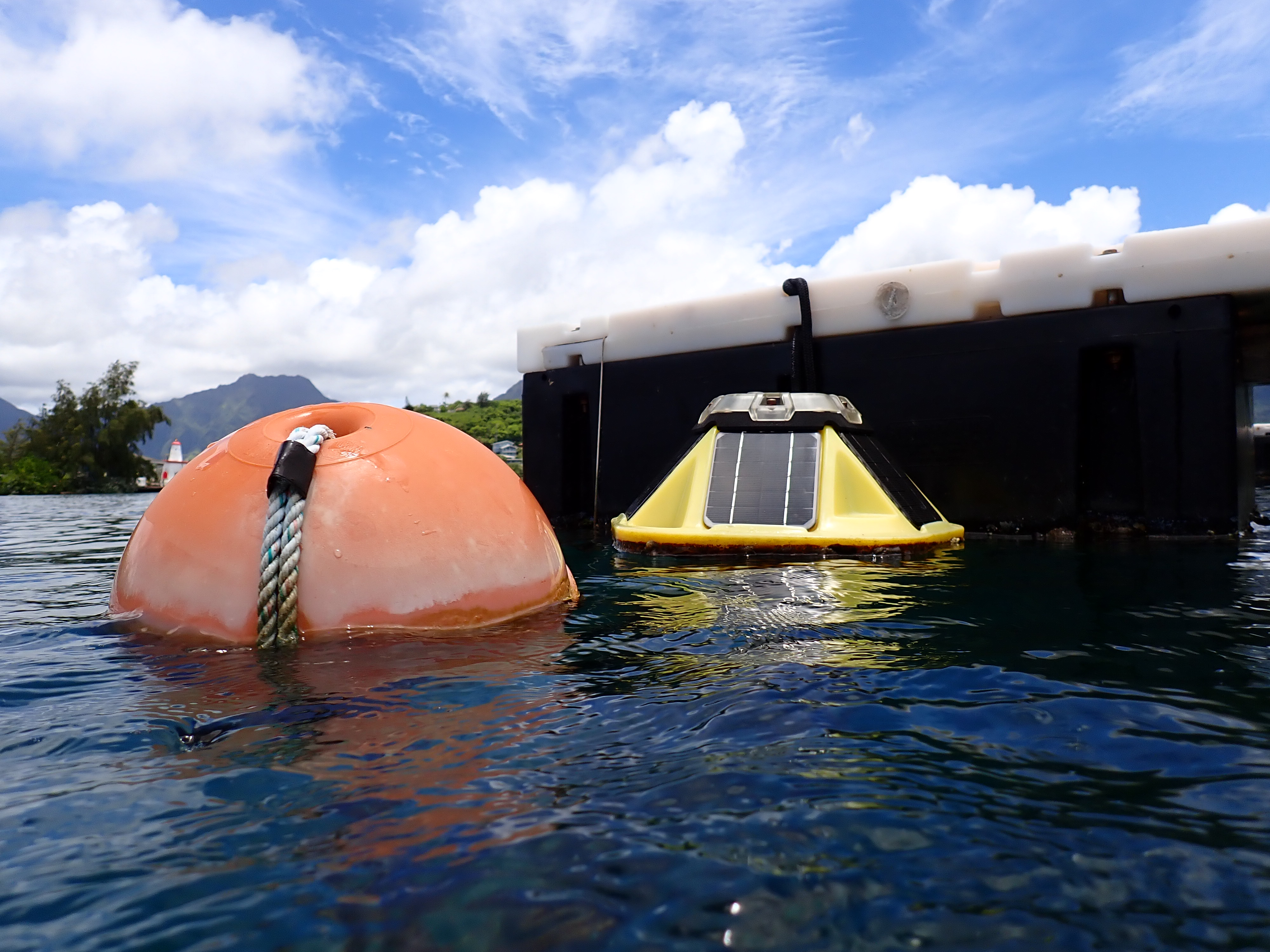
In 2021, the ToBo Lab received its first Spotter through Aqualink, a global coral reef monitoring program. Five years later, that buoy and its Smart Mooring cable have produced a continuous record of surface and subsurface temperature for the precise body of water the nursery occupies.
Before Spotter, temperature data at the nursery came from loggers that had to be physically retrieved, or from regional NOAA buoys and tide stations close enough to be useful but never quite local. Suchocki and Bardin could deploy a logger next to a particular pen and pull it weeks later. They could pull historical conditions from a station miles away. What they couldn't do was check the temperature at the nursery from their desks, or share what was happening there in real time.
"The way we find value in Spotter is less in one big moment," Bardin said, "but rather in the small, daily observations and comparisons we are able to make because of the live data."
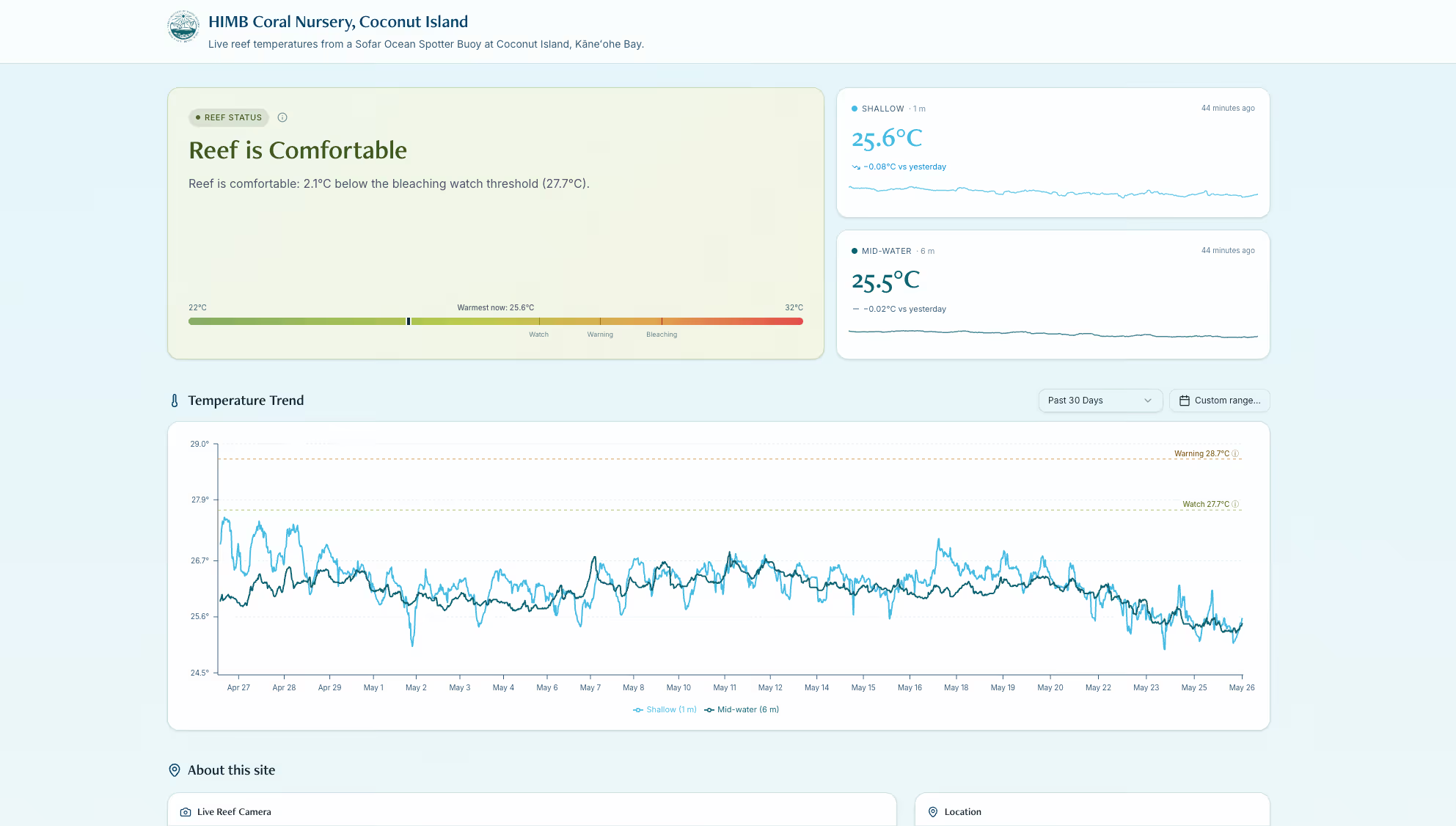
Suchocki and Bardin access the buoy three ways: through the Spotter Dashboard for day-to-day monitoring, by downloading data for offline analysis, and through the API for integration with the lab's other tools. Access to real-time, local data changes how experiments at the nursery get planned.
The team uses the temperature record to identify windows when deploying a heat-sensitive experiment would be unwise, and to time interventions like shading before predicted thermal stress arrives. Spotter readings also inform how the temperature of land-based tanks at the institute are adjusted to counteract the changing conditions of the bay, especially if things are heating up too much.
The continuous record also supports the kind of retrospective science the lab is increasingly known for. One PhD student is currently reconstructing the 2015 marine heatwave to compress it into a controlled bleaching experiment. That particular project draws on data sources predating Spotter's arrival, but the five-year Spotter record is now becoming exactly the kind of long-term, site-specific reference dataset the lab will use for similar reconstructions in years to come. "You can see the heat event that happened," Bardin said of the methodology, "and then you could also try to recreate it to better understand the mechanisms of coral stress responses, and even compare across heat-stress events.”
In early 2026, a prolonged Kona Low system parked itself over the Hawaiian Islands and delivered close to a month of heavy rain. Freshwater plumes spread across Kāneʻohe Bay and patchy bleaching showed up across the reefs. Due to unsafe bacteria levels in the water, many researchers couldn't reach their open-reef sites. The nursery's permanent infrastructure, combined with a camera on a pole that the team could lower from the deck, let them document the bleaching pattern in close to real time without submerging themselves in unsafe water. The lab submitted a report to Hawaiʻi's Department of Aquatic Resources (DAR) characterizing what they saw. Their report was one of very few that informed DAR of the corals' condition post-storm.
For Suchocki and Bardin, the moment crystallized something they'd been thinking about for a while: the nursery, with continuous water condition data behind it, could function as a kind of canary in the coal mine for Kāneʻohe Bay. When the next storm hits, the baseline will already be there.
The ToBo Lab's next chapter is about making more of the nursery's work visible to the people the science is for. Suchocki and Bardin want additional sensors to capture the compounding stressors behind coral bleaching: PAR (photosynthetically active radiation), conductivity, turbidity, and a current meter. Most bleaching events trace to the combination of high temperature and high PAR, and no single parameter explains it on its own. A self-cleaning underwater camera, the kind used in the Chasing Coral documentary, is planned for deployment at the Coral Nursery this summer with a public live stream to follow. The lab is also working with Sofar to embed a live Spotter dashboard into its public website, so anyone, researcher or not, can see what's happening in the bay.
Some of that infrastructure may be tested sooner than later. NOAA’s Coral Reef Watch has forecast bleaching events across the Hawaiian Islands this summer tied to El Niño conditions, and when the event arrives, the ToBo Lab's five-year Spotter record will serve as both a real-time reference and a long-term baseline for what the nursery experiences.
The throughline of all of it, in Suchocki's words, is access. Science, he said, "limits itself by overcomplicating stuff and underestimating how many people would be interested if you gave them the chance."
"It could offer a lot of value to other in-situ coral nurseries looking for a real-time data solution. The plug-and-play nature, excellent support staff, and great dashboards mean coral restoration practitioners can focus on the corals and not on building and designing custom sensors." - Chris Suchocki, Coral Nursery Manager, ToBo Lab, Hawaiʻi Institute of Marine Biology
.avif)