Wayfinder
Meet the Routers: Q&A with Mike Maturin-DiDomizio
Meet Routing Specialist Mike Maturin-DiDomizio and discover how his background in meteorology and fleet operations shapes the routing decisions vessels depend on every day.


At sea, no two voyages are the same. At Sofar Ocean, our routing team works around the clock to help crews make safe, informed decisions throughout every voyage. By combining the latest maritime weather forecasts with vessel performance insights, routers guide ships through complex and changing conditions — supporting both safety and voyage optimization along the way.
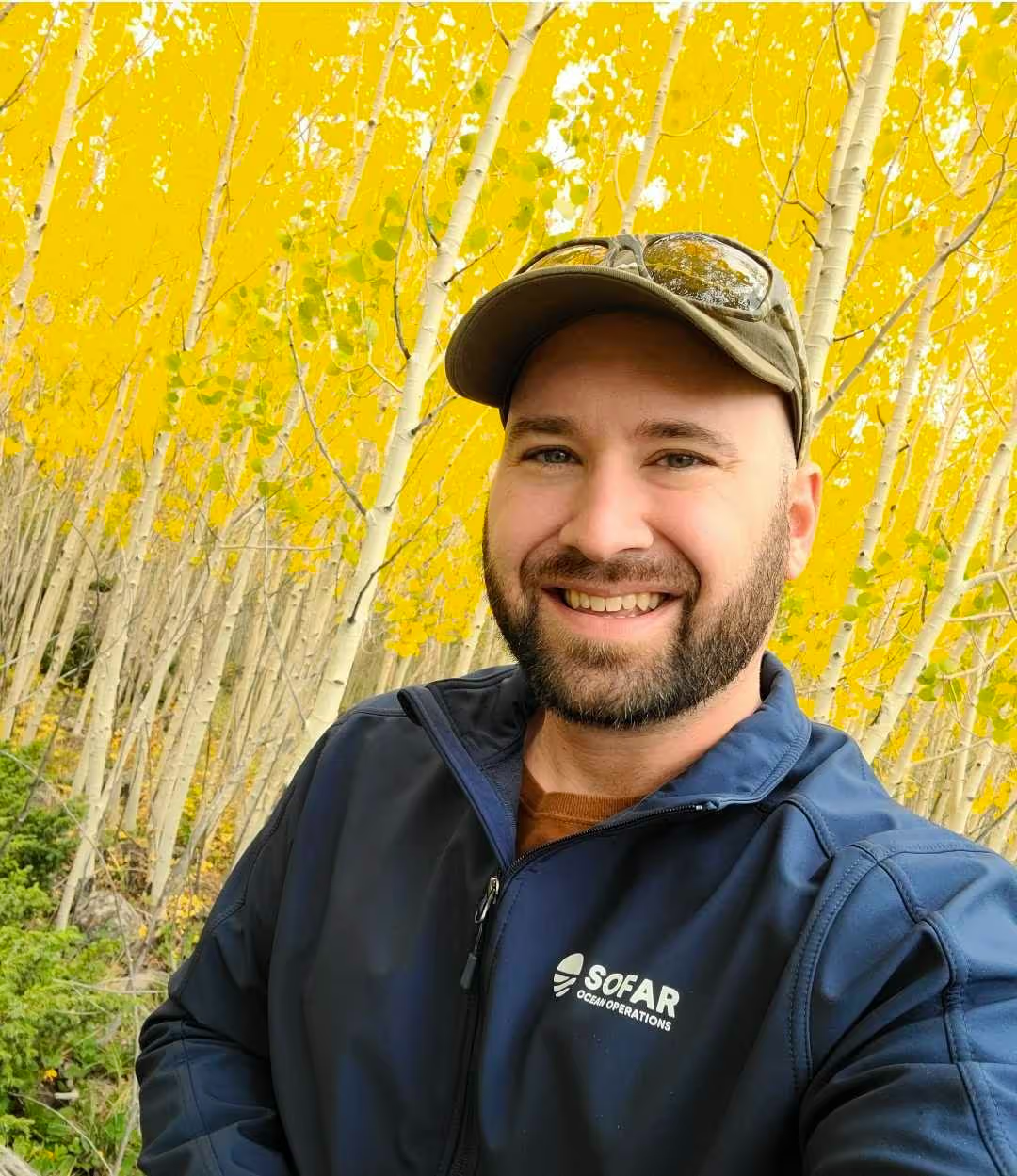
Before joining Sofar Ocean, Mike spent over a decade leading fleet operations, sharpening his approach to weather routing and building the kind of institutional knowledge that makes a real difference in high-stakes moments. Now, as a router on the Wayfinder team, he works directly with crews to recommend the safest and most efficient routes based on evolving weather conditions and vessel performance data. His meteorology background deepens that work further, and he regularly draws on it to help teammates better understand weather patterns and how to factor them into routing decisions.
Over the years at Sofar Ocean, Mike has taken on a range of responsibilities — from supporting buoy deployment to building strong client relationships and contributing to the steady growth of Sofar's vessel optimization services.
Sofar first came onto my radar during the rapid growth of the climate tech industry around 2021. The company’s mission to advance ocean intelligence through the use of sophisticated buoys that collect real-time ocean data immediately stood out to me. When I joined the team in 2022, I was presented with numerous opportunities to support buoy deployment, strengthen client relationships, and contribute to the steady growth of vessels utilizing our optimization services.
Since then, Sofar has continued to expand its fleet while maintaining a high-quality product for its customers. I’m excited to work alongside such a talented and innovative team as we continue to grow and contribute to a more sustainable future. Our oceans play a critical role in climate sustainability, and I’m proud to be part of a mission that helps advance our understanding of it.
The most rewarding aspect of my job is providing high-quality support to our vessels while helping keep crews safe at sea. It’s also incredibly fulfilling to build trust and provide confidence, clarity, and ease for our shoreside partners. At the end of each day, I feel a strong sense of accomplishment knowing that our vessels are operating safely and that our clients are satisfied with the services we provide.
Multiple operational factors must be evaluated when developing an optimal vessel route; however, safety remains the primary constraint guiding all routing decisions. Meteorological conditions—including winter storms and tropical cyclones—can evolve rapidly, and forecast guidance may change significantly within a 12-hour window following a previous routing assessment. My initial routing solution prioritizes risk mitigation by avoiding hazardous sea states, severe weather, and adverse oceanographic conditions.
Once a safety-optimized route has been established, I conduct further analysis to identify alternative routing scenarios that incorporate economic considerations, particularly fuel efficiency and voyage optimization. While fuel savings and operational efficiency are important for the client, they must always be balanced against the safety of the crew, vessel, and cargo. Additionally, I evaluate vessel motion risks, including synchronous and parametric rolling, by analyzing forecast wave spectra, encounter periods, and vessel heading relative to dominant swell systems. Routes are then strategically adjusted to reduce the likelihood of these dynamic instabilities and to improve onboard safety and crew comfort throughout the voyage.
The primary constraints in voyage planning include sailing duration, daily maximum fuel consumption, and prevailing weather conditions. Many vessels operate under strict laycan windows that require precise arrival times at their next port of call. In the absence of weather, meeting these schedules would be relatively straightforward; however, dynamic meteorological and oceanographic conditions introduce significant operational complexity.
Weather routing addresses these challenges by evaluating vessel-specific performance characteristics against forecast environmental conditions. By integrating operational constraints such as laycan requirements, fuel consumption profiles, and vessel motion risks, multiple optimized routing options can be developed. These solutions aim to balance the Master’s operational preferences with the commercial priorities of shoreside operators, particularly regarding fuel efficiency and schedule adherence.
Continuous monitoring and clear communication with both vessel and shoreside stakeholders are essential, allowing routing strategies to be adjusted as conditions evolve.