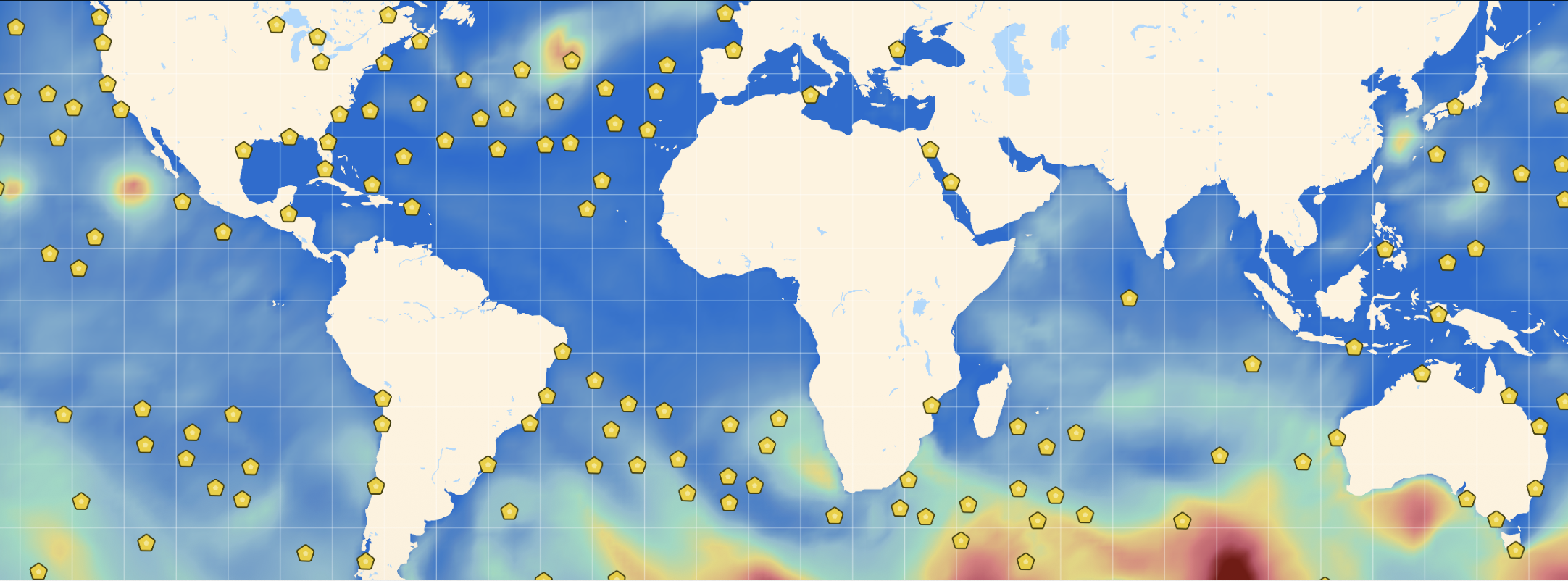
Container loss due to parametric rolling is often the result of an incomplete forecast that poorly resolves the full sea state. Wave period and direction are the most critical variables when predicting parametric roll conditions and most satellites cannot observe either one. Sofar Ocean's global fleet of Spotters capture wave parameters, and those observations directly used in our marine weather forecast, improving our forecasts in real-time.
Up to 50 percent more accurate than leading global models.
What's inside
- What parametric rolling is, and why it is a resonance rather than a consequence of large waves
- Why voyage risk and safety cannot be derived from significant wave height alone
- How global real-time ocean observations improve the forecast in real-time
- The operational impact of wave forecasting on Cape of Good Hope routing
Who it's for
- Chief officers: wave period and direction at the vessel's loading condition, and the heading and speed changes that break the resonance.
- Fleet managers: which vessels sit in the vulnerable band, container ships over 250 meters with long roll periods and low stability margin.
- Weather routing managers: a forecast constrained by measurement of period and direction in water where general-purpose products have none.
- Operations directors: what avoidance costs in speed reductions, drifting and late arrivals, and how to plan for it.