

Queensland's coastline stretches roughly 7,000 kilometers, from the tropical Gulf of Carpentaria to the subtropical Gold Coast. Tropical cyclones threaten communities along its length every season. When a storm approaches, emergency managers need real-time wave and storm surge data to predict which towns face flooding and whether evacuations are necessary. The stakes are measured in lives.
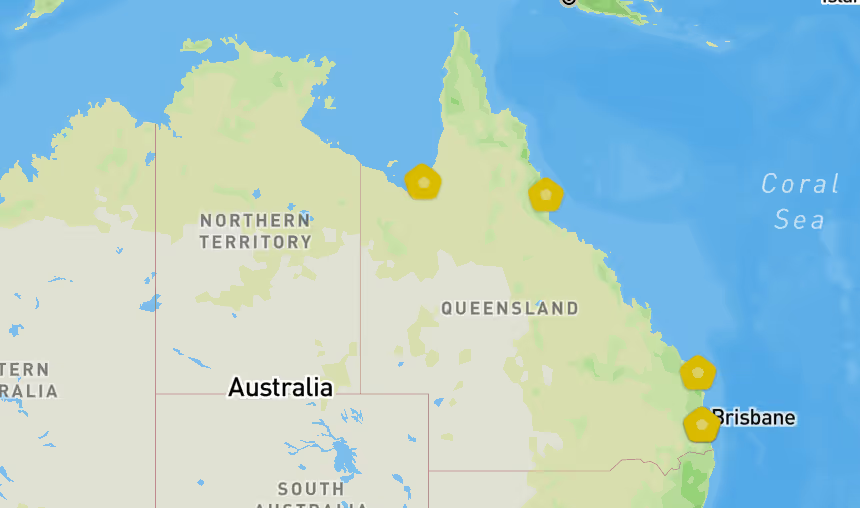
The Queensland Department of Environment, Science, Tourism, and Innovation (DETSI) operates the monitoring infrastructure behind those decisions: a network of 60 tide gauges and a fleet of wave buoys feeding data to storm tide prediction teams. For years, the wave buoy side of that network relied on Datawell DWR-G4 units, known in the team as "Baby Ocean Buoys" or BOBs. These were capable instruments, but they ran on batteries alone, limiting deployments to roughly four weeks before retrieval. Telemetry depended on Argos satellite passes, which delivered data about 20 times per day. And with only a handful of units in the fleet, the team could cover only a fraction of the coastline at any given time.
Grant Millar, a Senior Engineer who manages the operational side of DETSI's wave monitoring program, saw the constraint clearly: "Queensland's a big area, and we're a small team."
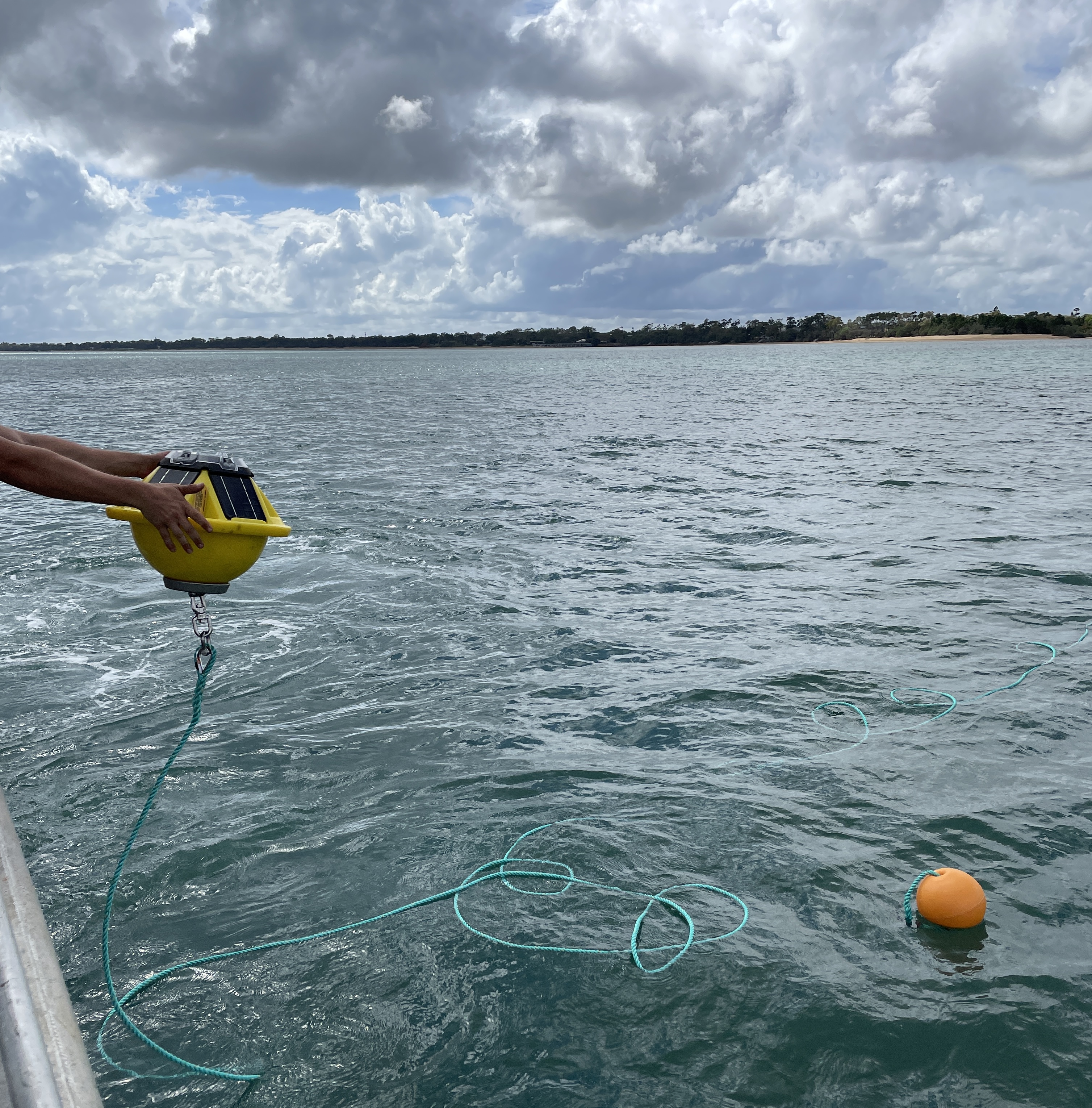
Millar first learned about Spotter through a post on an oceanography mailing list in mid-2017. What caught his attention was not a single feature but a practical equation: at the cost of one traditional wave buoy, DETSI could secure a network of Spotters.
That math opened up possibilities the team had never seriously considered. Solar power meant indefinite deployment windows rather than four-week battery limits. Iridium satellite telemetry (and now cellular) delivered data every 30 minutes instead of relying on infrequent Argos passes. And the compact form factor meant deployment from a small vessel with a simple anchor and mooring, no specialized crane or crew.
But the economics also shifted the team's risk tolerance. For the first time, they could deploy a wave buoy into conditions where recovery was uncertain and the mission still made financial sense. The question changed from "can we afford to lose it?" to "can we afford not to try?”
That made an old idea suddenly viable: dropping wave buoys from aircraft into the paths of cyclones.
Queensland's cyclone monitoring program has roots stretching back to 1968, when a series of destructive storms prompted a government review recommending wave measurement during cyclones. For decades, DETSI pre-positioned wave buoys in northern towns so that emergency management helicopters could deploy them when a cyclone approached. But the battery-powered Datawell units were deployed into cyclones only twice in all those years.
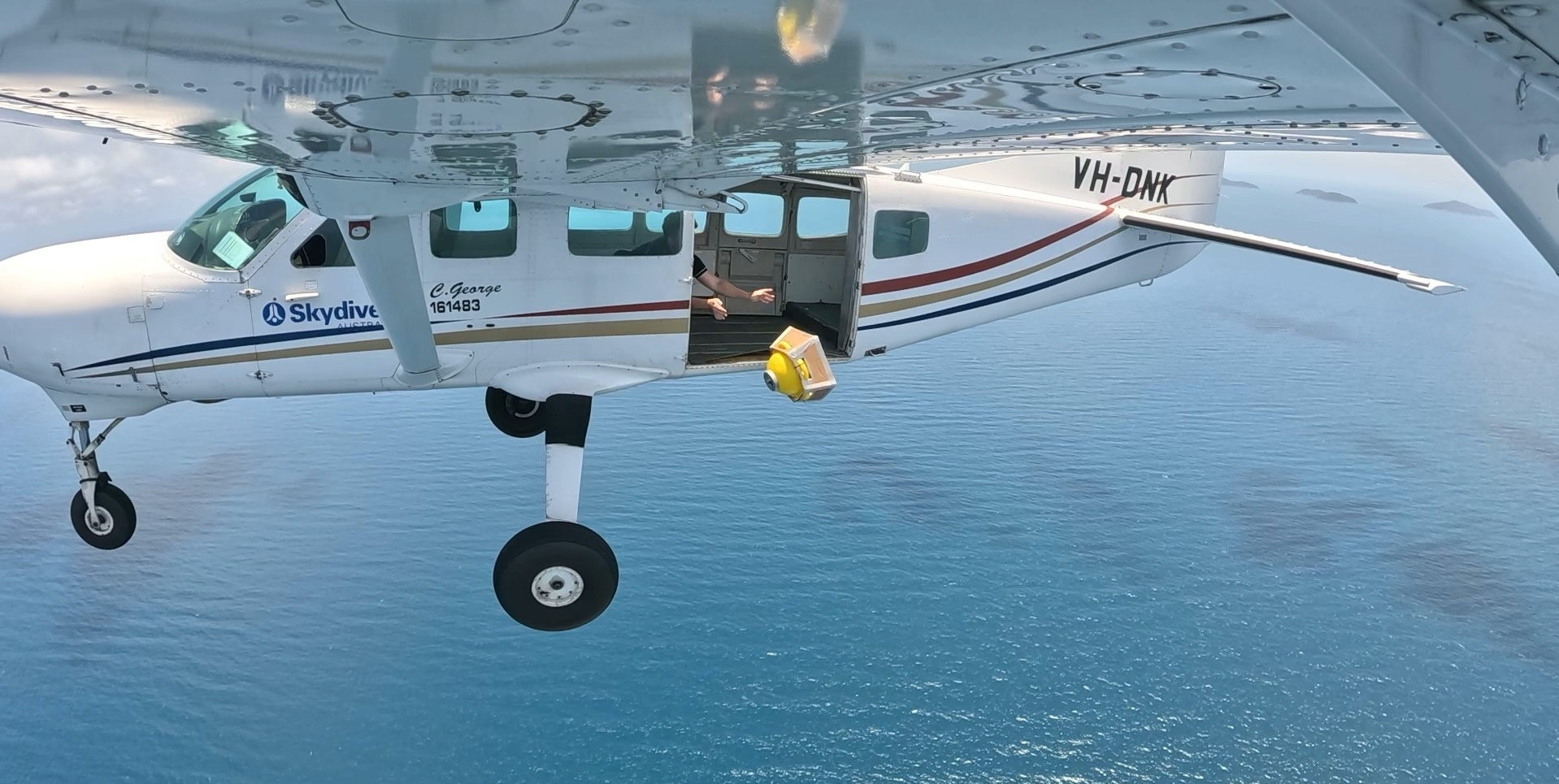
When Spotter entered the fleet, the operational equation shifted. The team now maintains two to three aerial drop Spotters alongside their moored units. When a cyclone forms, the process begins: the team monitors forecast tracks, selects a target location, and coordinates with a local aviation operator. A light aircraft flies out, and the Spotter is dropped from the cabin door into the ocean ahead of the storm.
"In these situations, the money is not a problem," Millar shared. "It's people's lives that are at stake."
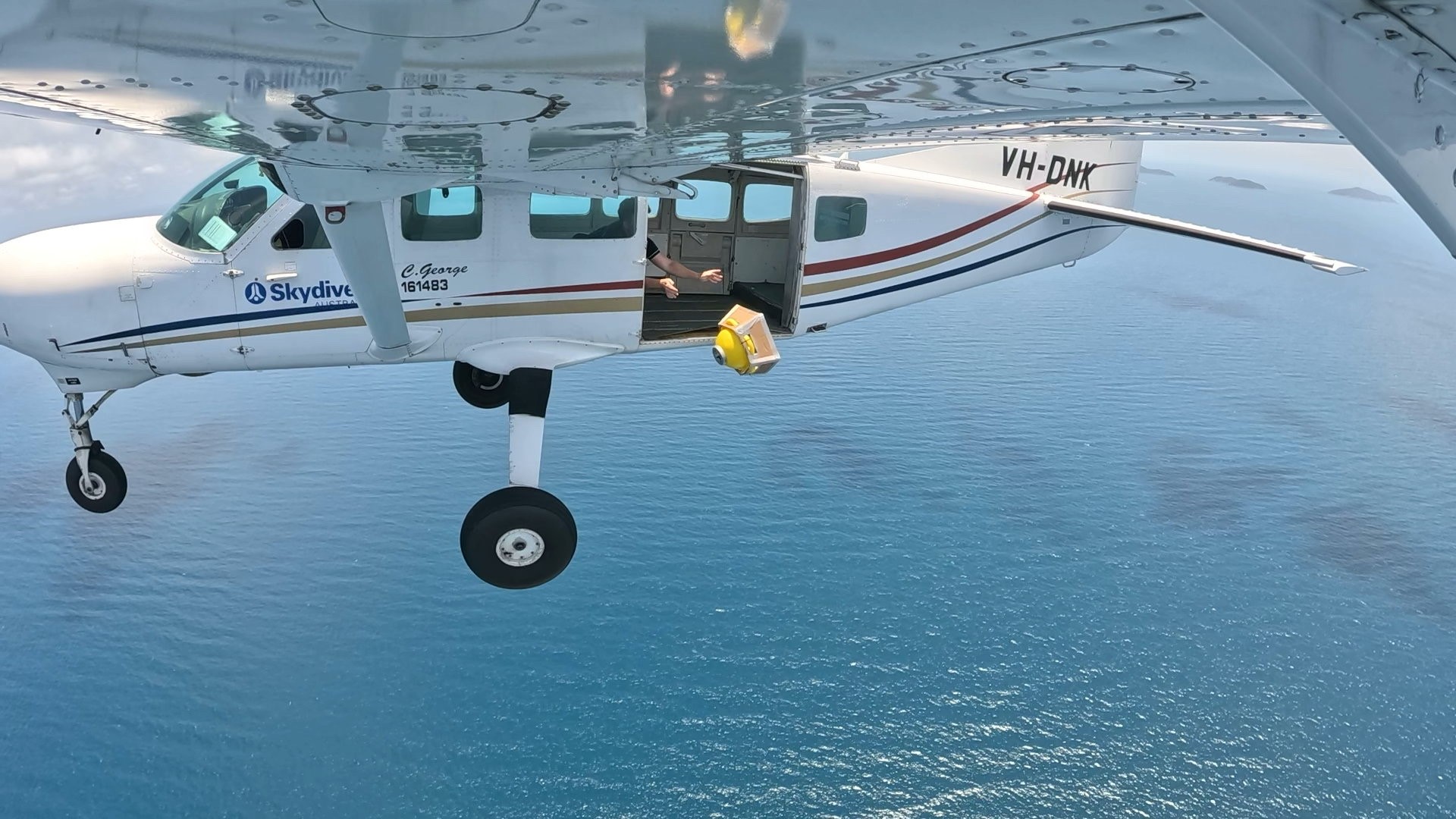
The aircraft offers two advantages over vessel-based deployment. Speed is the first: a plane covers the distance to the target zone in a fraction of the time a boat would need. Safety is the second. A vessel caught in deteriorating conditions retreats slowly; a pilot simply turns around. As Millar put it, a boat traveling at 10 or 12 knots takes far longer to reach safety than an aircraft doing 100.
Once the Spotter hits the water, data begins transmitting back every 30 minutes over Iridium. At Emergency Management Queensland headquarters in Brisbane, storm tide advisors work in eight-hour shifts during events, monitoring wave heights alongside the 60-station tide gauge network. That data feeds into storm surge models used to predict flooding for communities in the impact zone.
One of the most unexpected returns on the Spotter investment has been public engagement. The Spotter Dashboard's public sharing feature lets Millar push real-time buoy data to anyone with a link. He shares it with emergency managers, local councils, aviation operators, and members of the public.
That visibility has created a practical benefit: when a free-drifting Spotter washes ashore or goes off-station, the public knows it exists, knows whose it is, and often helps get it back. Local fishermen have retrieved drifting units. After one recent cyclone deployment, a local resident picked up a beached Spotter and returned it to the team after a simple phone call.
For a small team covering thousands of kilometers of coastline, that community awareness is an operational asset. "We rely on the public a lot," Millar said. "Especially up there, there's just nobody. So we contact local fishermen, anybody who's passing."
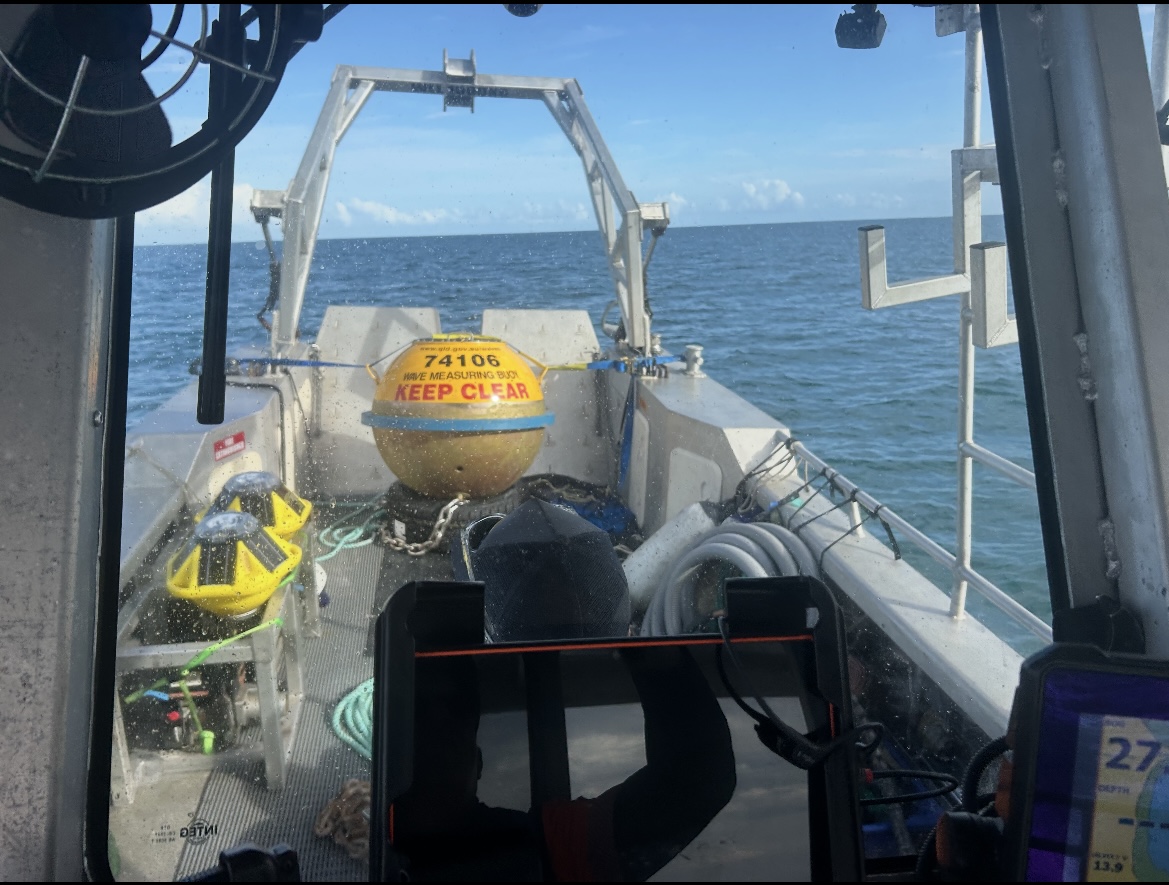
DETSI did not retire their Datawell buoys when Spotters arrived. Instead, they ran comparison studies, deploying Spotters alongside their existing fleet. The results gave the team confidence that Spotter data was accurate and reliable, a critical threshold for instruments feeding emergency management decisions where lives are at stake.
"We have verified accurate data from comparison studies," Millar noted in his survey response. That validation underpins the team's willingness to deploy Spotters as the primary real-time instrument during cyclone events.
.avif)
The DETSI team is expanding. A new Spotter arrived recently, and another aerial drop unit is awaiting approval. Millar's ambition is to deploy multiple Spotters in a line ahead of a cyclone, spaced 10 to 20 miles apart, to capture the spatial variability of wave conditions across a storm's path. "Next time, we'll try throwing a few out of a plane," he said. "Just to get more data."
For a program that began with a single buoy and a government review in 1968, the trajectory is clear: more coverage, faster response, and a growing body of cyclone data that feeds back into the models protecting Queensland's coastal communities.
"The product is pretty damn good. The stainless steel Datawell buoys were good for a long time. But these things are just so much better." Grant Millar, Senior Engineer, Department of Environment, Tourism, Science, and Innovation, Queensland Government
.avif)


