Frameworks and criteria are useful. But what does effective monitoring actually look like when real teams deploy it in real oceans, with real constraints?
These stories come from MPA managers and researchers who found ways to close specific gaps in their monitoring. Each operates in a different geography, at a different scale, with different priorities. What they share is the shift from reactive management to continuous, evidence-based decision-making.
Case studies
From data gaps to real-time reef monitoring
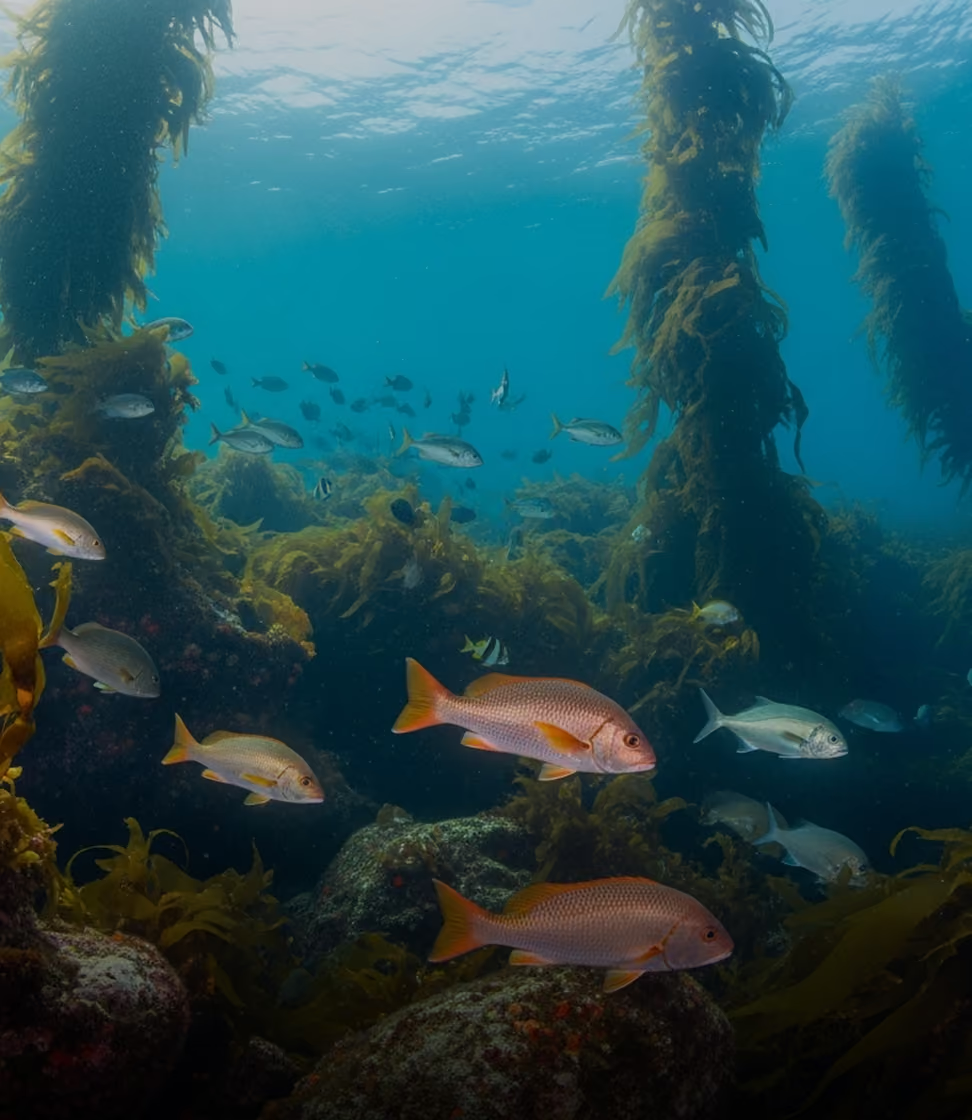
Poor Knights Islands Marine Reserve
The challenge: Rising sea temperatures fueled a surge in destructive sea urchins, while temperature data was only available after time-consuming logger retrievals—long after events had passed.
The approach: A Sofar Spotter Platform replaced manual retrieval with continuous access to subsurface temperature, wave, and wind data directly from a laptop.
The outcome: During a marine heatwave in early 2024, the Spotter caught a bleaching-threshold exceedance that would have arrived weeks late under the old approach. Rangers across New Zealand's reserve network have taken notice.
Solving a deadly mystery with real-time oxygen monitoring
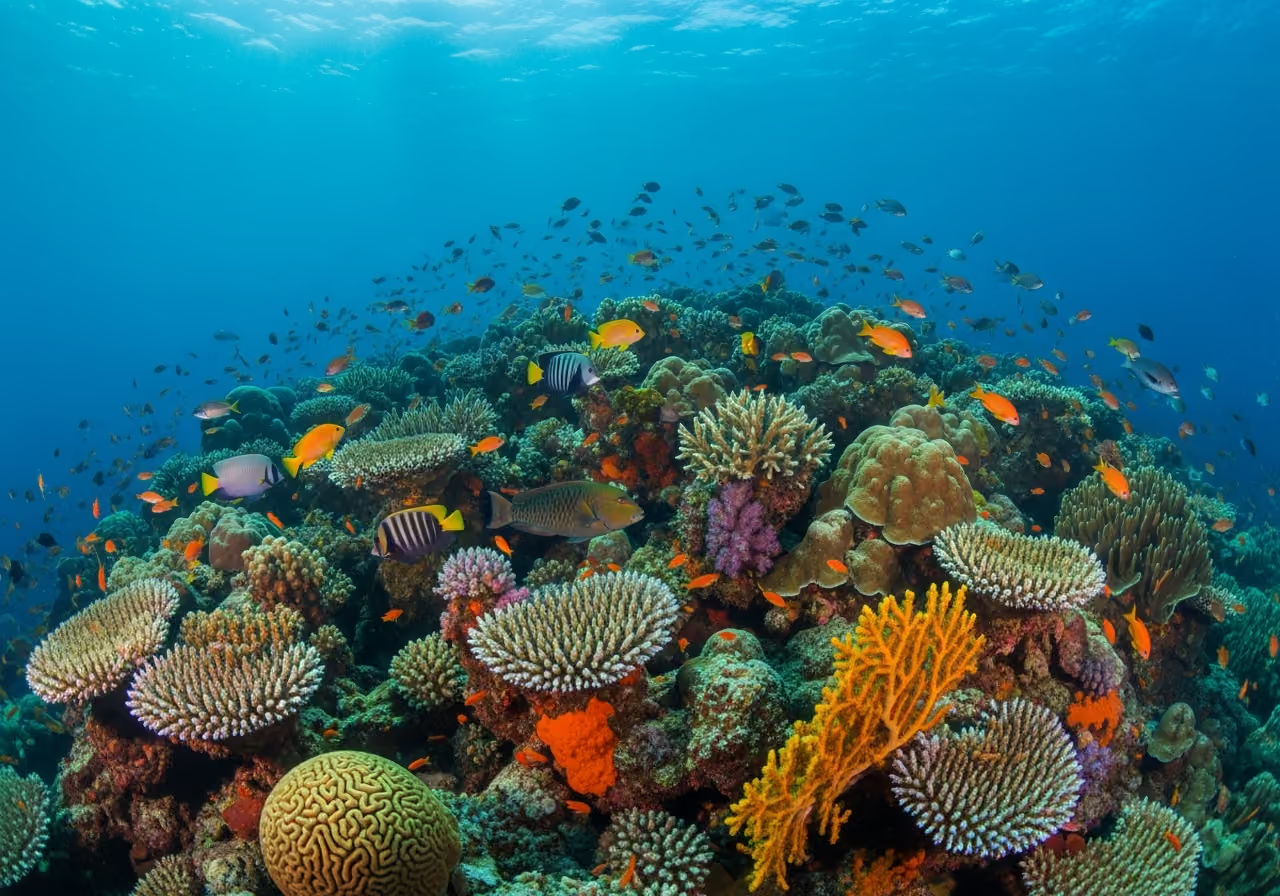
Flower Garden Banks National Marine Sanctuary
The challenge: A localized coral die-off left managers with a troubling question and no real-time data to answer it. Researchers suspected hypoxia but existing monitoring couldn't capture dissolved oxygen levels continuously.
The approach: Dr. Xinping Hu's team at UT Marine Science Institute deployed Sofar Spotter Platforms to track dissolved oxygen alongside waves and temperature, giving sanctuary staff their first live window into subsurface conditions.
The outcome: Continuous monitoring confirmed the hypoxia hypothesis and revealed the dynamics of low-oxygen events: when they form, how long they persist, and what triggers them. This evidence now informs how the sanctuary protects its coral communities.
A distributed monitoring network as a conservation tool
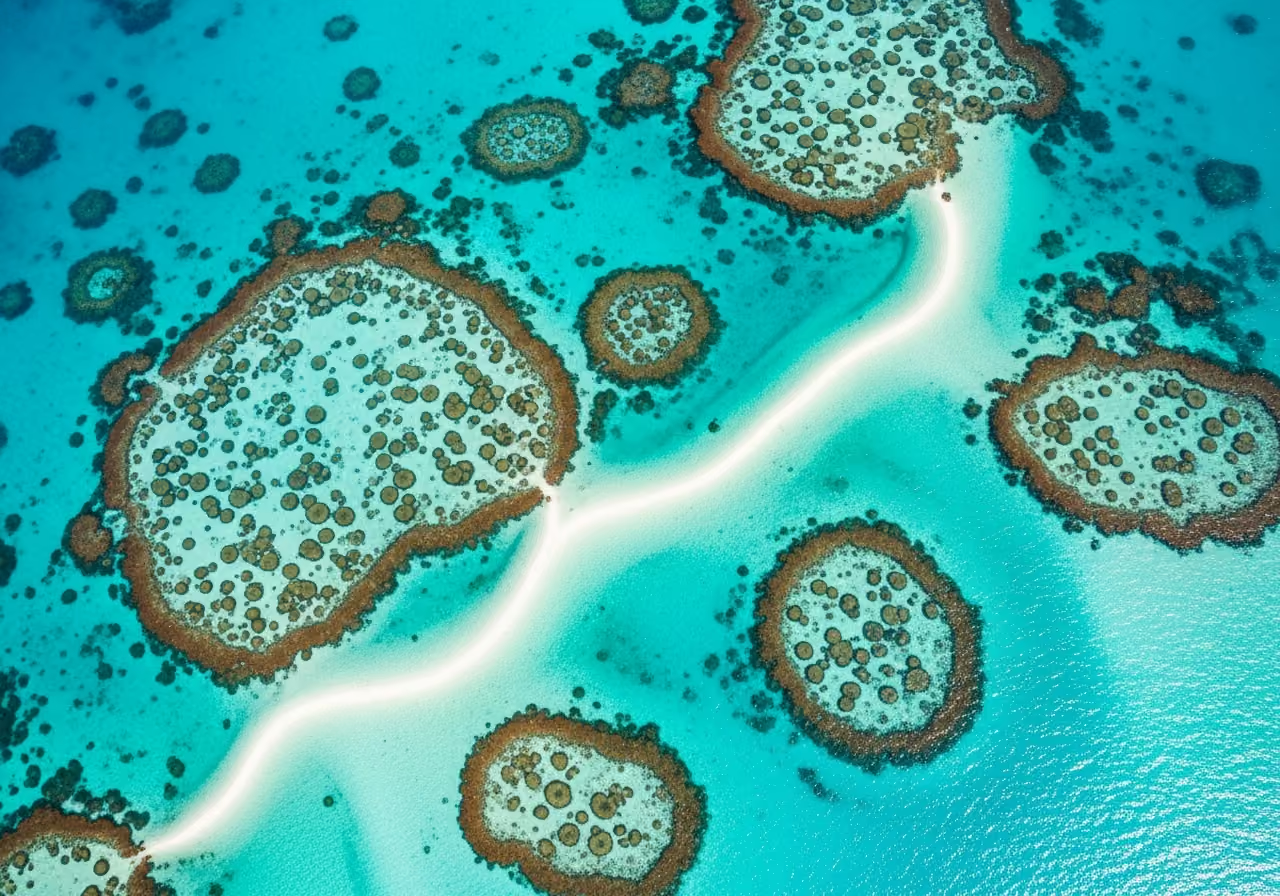
Florida Keys National Marine Sanctuary
The challenge: NOAA's Florida Keys NMS manages seven coral reef sites across a vast geographic range, relying on satellite data too coarse for site-specific restoration decisions. Satellite-derived temperatures can miss localized thermal stress by several degrees.
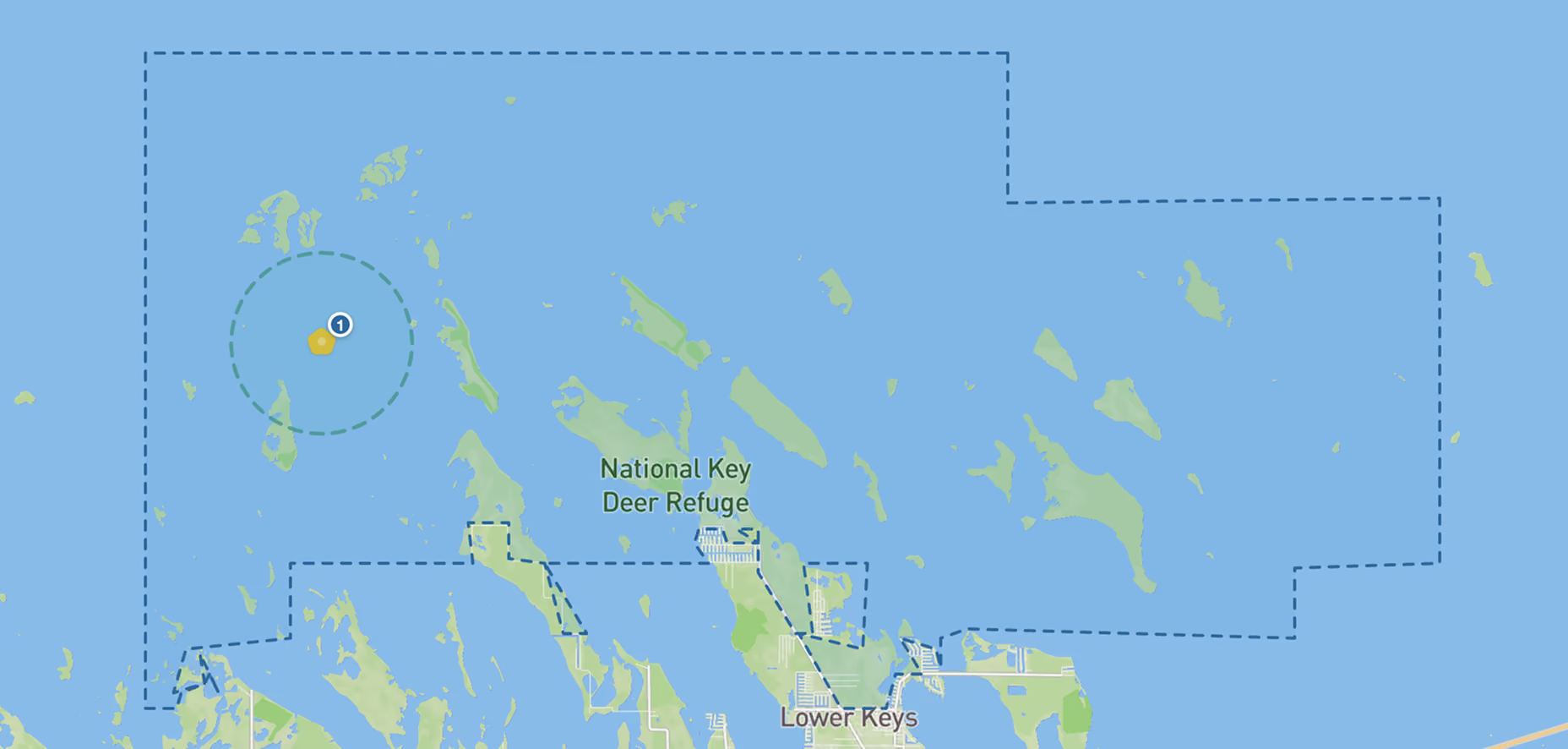
The approach: By deploying a Spotter Platform at each of the seven reef sites, FKNMS built a live, distributed view across the entire sanctuary with site-specific subsurface temperatures in real time.
The outcome: Managers now make better-informed go/no-go decisions for coral outplanting, and direct observations feed into NOAA's Coral Reef Watch bleaching alert models. A reactive, satellite-dependent process became proactive and site-level.
Scaling up coastal observation to track environmental change
National Coastal Observation Network
The challenge: South Africa's coastline is ecologically dynamic and chronically under-observed. MPA managers lacked the long-term, continuous data needed to distinguish natural variation from climate change signals.
The approach: Dr. Tommy Bornman of SAEON and André Hoek of STS deployed a distributed network of Spotter Platforms at key coastal sites, integrating custom thermistor strings via the Bristlemouth open connectivity standard.
The outcome: The network is building the long-term environmental baseline MPA managers need. Continuous, multi-parameter observations at distributed sites are replacing sporadic surveys, giving a clearer picture of how coastal ecosystems respond to change.
Why one buoy is rarely enough
A theme runs through these stories. In every case, the value of monitoring increased when coverage expanded. The Florida Keys didn't deploy a single device; they deployed seven, one at each reef site. South Africa didn't instrument one location; they built a national network. The Poor Knights deployment is already sparking interest across New Zealand's reserve system.
This is not a coincidence. Conditions at one end of a reef can be dramatically different from those at the other. A single monitoring device will always leave critical gaps. Water temperature, dissolved oxygen, and wave exposure vary over short distances, and that variability is often where the most important ecological signals hide.1–6
More devices, deployed smarter, produce richer data and better outcomes for the ecosystems that depend on them.
The economics of monitoring have traditionally forced managers into difficult choices: invest in one expensive, high-capability platform or spread limited budgets across many low-cost but disconnected instruments. Cost-effective, modular systems that communicate on a shared data infrastructure change this calculus. Managers can start with a single device and expand to a network as needs and budgets allow, without replacing what they've already deployed.
Go deeper: The case for monitoring networks
Sofar's white paper draws on three deployments, including NOAA's Florida Keys NMS, to make the quantitative case for distributed monitoring networks. It covers the spatial variability that single instruments miss, the cost structure that makes networks feasible, and the data architecture that ties distributed devices into a coherent picture.
1. Safaie, A., Silbiger, N.J., McClanahan, T.R., Pawlak, G., Barshis, D.J., Hench, J.L., Rogers, J.S., Williams, G.J., & Davis, K.A. (2018). High frequency temperature variability reduces the risk of coral bleaching. Nature Communications, 9, 1671. doi: 10.1038/s41467-018-04074-2
2. Davis, K.A., Lentz, S.J., Pineda, J., Farrar, J.T., Starczak, V.R., & Churchill, J.H. (2011). Observations of the thermal environment on Red Sea platform reefs: A heat budget analysis. Coral Reefs, 30(Suppl 1), 25–36. doi: 10.1007/s00338-011-0740-8
3. Brown, K.T., Eyal, G., Dove, S.G., & Barott, K.L. (2023). Fine-scale heterogeneity reveals disproportionate thermal stress and coral mortality in thermally variable reef habitats during a marine heatwave. Coral Reefs, 42(1), 131–142. doi: 10.1007/s00338-022-02328-6
4. Johnson, M.D., Scott, J.J., Leray, M., Lucey, N., Bravo, L.M.R., Wied, W.L., & Altieri, A.H. (2023). Increasing hypoxia on global coral reefs under ocean warming. Nature Climate Change, 13, 403–409. doi: 10.1038/s41558-023-01619-2
5. Lentz, S.J., Churchill, J.H., Davis, K.A., Farrar, J.T., Pineda, J., & Starczak, V. (2016). The characteristics and dynamics of wave-driven flow across a platform coral reef in the Red Sea. Journal of Geophysical Research: Oceans, 121(2), 1360–1376. doi: 10.1002/2015JC011141
6. Leichter, J.J., Helmuth, B., & Fischer, A.M. (2006). Variation beneath the surface: Quantifying complex thermal environments on coral reefs in the Caribbean, Bahamas and Florida. Journal of Marine Research, 64(4), 563–588. doi: 10.1357/002224006778715711